History

Five centuries of history

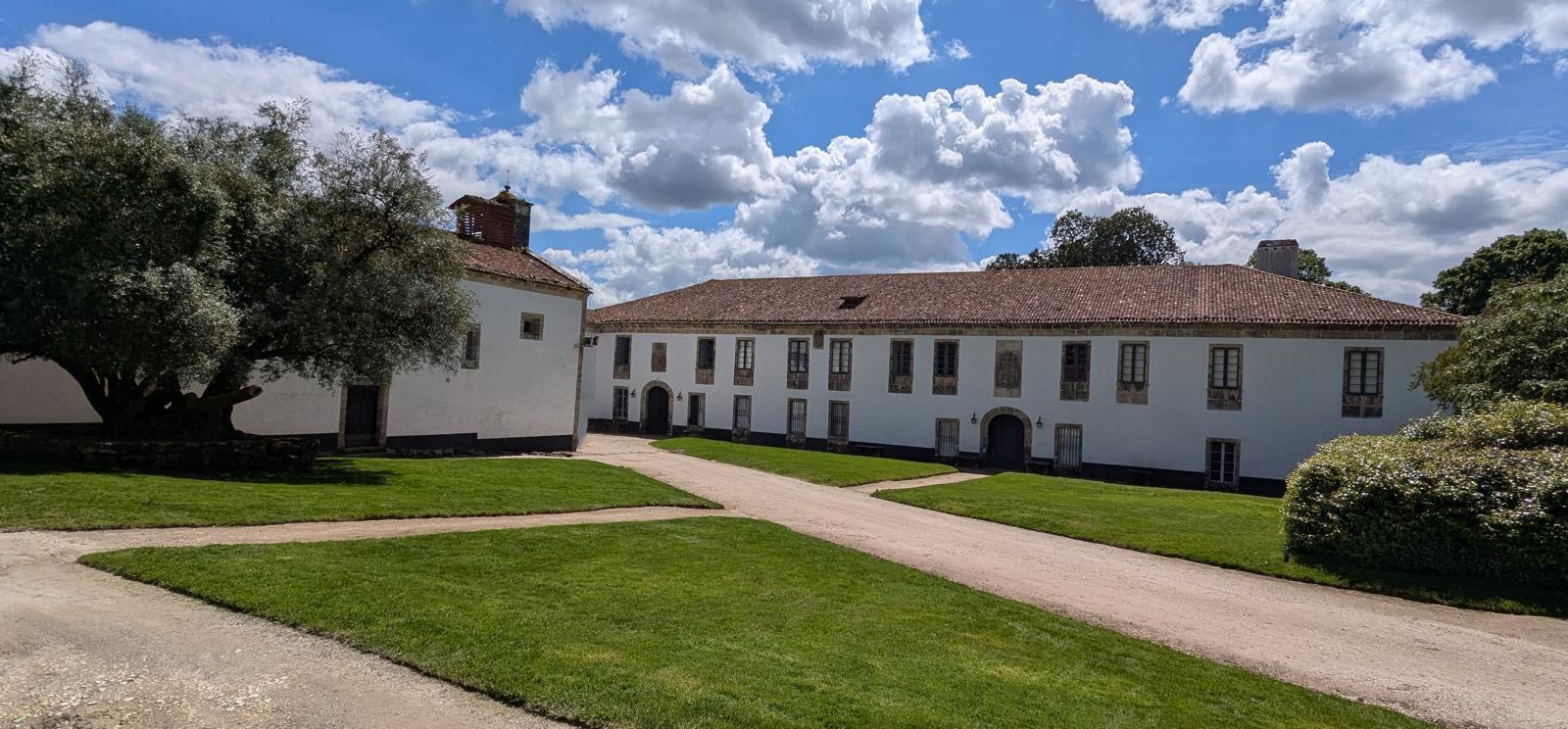
The Pazo de Santa Cruz de Rivadulla, also known as Pazo de Ortigueira, stands sheltered by Pico Sacro in the parish of Santa Cruz de Rivadulla, municipality of Vedra (A Coruña).

Pazo de Santa Cruz de Rivadulla
16th Century

Foundation

The Canon of Santiago Cathedral, Juan Ibáñez de Mondragón, acquired the properties that would become the Pazo de Santa Cruz in the early 16th century — known at the time as the Tower and Manor of Ortigueira.

The Canon and his nephew Cardinal Juan de Mondragón extended the estate, built the chapel, restored the buildings and laid the skeleton of what can be visited today: olive and vine plantations, fountains, ponds, the cascade, the granary and the other buildings.

17th Century

Baroque architecture

Andrés Ibáñez de Mondragón commissioned the works to Domingo de Andrade — architect of Santiago Cathedral and a key figure of Galician baroque — who designed the baroque ensemble and the La Coca fountain. Successive improvements over the centuries gave the Pazo its current structure.

19th Century

The romantic garden

The Armada family developed much of the romantic garden during the second half of the 19th century. Iván Armada brought Japanese camellias and exotic plants from all over the world — many of those specimens are now monumental trees.

Since 1975, the estate has reproduced camellia varieties exported across Europe, recognised with over 700 varieties as a Garden of Excellence by the International Camellia Society.

Today

A Jacobean landmark

One of Galicia's leading historic gardens, recognised as a Cultural Route of the Council of Europe. The estate holds the highest concentration of officially catalogued singular trees in Spain.

Located just metres from the Portuguese Way of Saint James — a cultural landmark for pilgrims and travellers heading to Compostela.